








Godly Leadership: 4 Lessons from Nehemiah 6-7
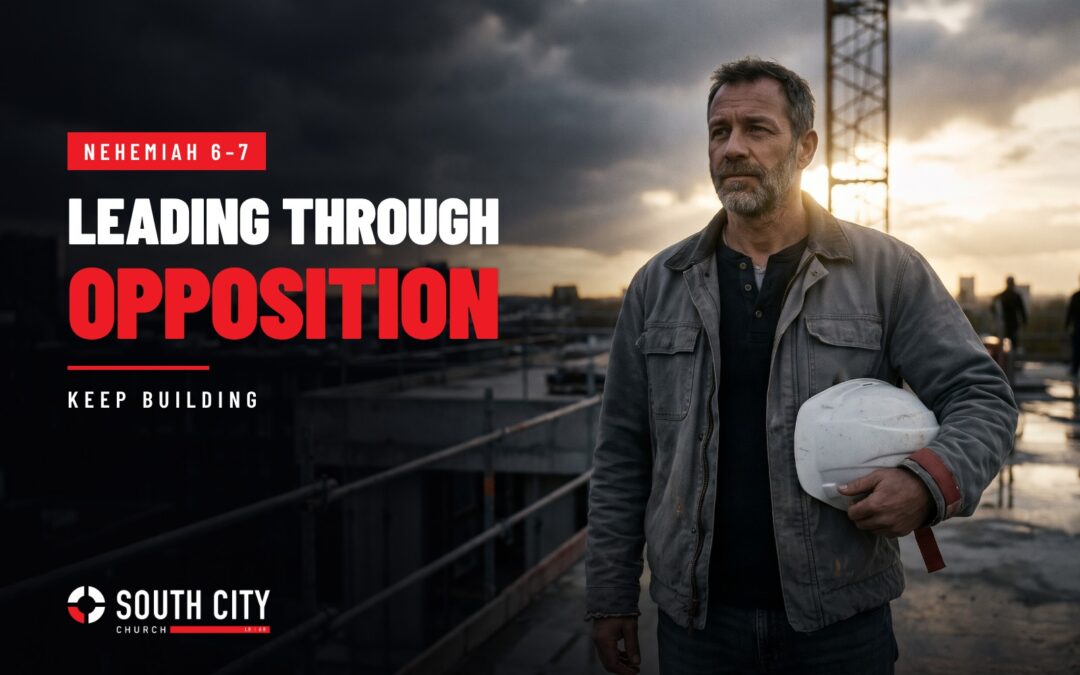
Godly leadership is leading people by God’s character and Word rather than personal talent. Nehemiah 6-7 shows what it looks like: staying on mission under opposition, delegating to faithful people, staying sensitive to the Lord, and sacrificing first.
The wall was finished. Nehemiah 6:15 says it was completed in 52 days, and even the surrounding nations recognized that “this work had been accomplished with the help of our God.” Yet the very next verses show Nehemiah right back in the middle of opposition. That tension is where godly leadership gets tested, and it’s a central lesson in South City Church’s Nehemiah series in Little Rock, Arkansas.
Why Do Believers Keep Facing Enemies?
Opposition is not a sign that God has left. It often shows up when you’re living for Jesus and influencing a broken world for the gospel. First Peter 5:8 warns that your adversary “prowls around like a roaring lion,” and John 10:10 names his agenda: to steal, kill, and destroy.
Nehemiah’s enemies fit that pattern. Tobiah, an Ammonite, had married into prominent Jewish families. He then cultivated loyalty among Judah’s nobles through oaths and letters, so the very people who should have been committed to God by covenant were committed to him instead. His goals were confusion, fear, and, finally, Nehemiah’s death.
Nehemiah’s response offers a practical pattern:
- Avoid meetings and conversations whose real purpose is to harm you (Nehemiah 6:3).
- Test every claim of “God said this” against Scripture, as Nehemiah did with the hired false prophet.
- Refuse to let someone else’s false narrative become your story.
- Redirect fear. You may never be completely unafraid, but you can shift your fear from people to God, the only One worthy of it.
Don’t let their narrative become your story. Know the truth. Stay focused on what God’s called you to be and who he’s called you to be.
Psalm 23 fits this moment well. God prepares a table “in the presence of my enemies,” and the rod and staff provide both protection and direction.
What Does a Godly Leader Do Differently?
Nehemiah 7 shows a leader who is clear about his calling and doesn’t try to carry it alone. He surveyed the damage, planned, built, prayed, and stood guard. Then he did what many leaders resist: he delegated.
He placed gatekeepers, singers, and Levites around the city to cover both protection and worship. He put Hanani and Hananiah in charge, not because Hanani was his brother, but because they were faithful and “more God-fearing than many.” His main requirement for leadership was godliness.
This applies to the church today. Ephesians 4 says leaders equip the saints for the work of ministry, so no single pastor is meant to preach, counsel, disciple, and mow the lawn. It also applies at home and work. A mom who disciples her children and serves her neighbors is leading, and leading well.
Godly leaders also stay sensitive to the Lord. Nehemiah 7:5 says God put it on his heart to gather the people and register them by genealogy. A stirring in your heart is not enough on its own. It must agree with God’s Word and be tested with the people of God.
Godly leadership is about how well you follow Jesus. How well you surrender to him, how well you obey.
What Does It Mean to Forget the Plot?
When God prompted Nehemiah to check the genealogies, he was reminding a people of their identity. After about 90 years of intermarriage and blended beliefs, many of the nobles had forgotten who they were and what God was doing. They had forgotten the plot.
Some of you have forgotten the plot. Some of you are just seeing what’s in front of your face instead of remembering the God of promise.
It’s easy to do the same. When life is hard, all we see is what’s in front of us. But God’s story is bigger. His promise to Abraham in Genesis 12 to bless every family on earth leads to Jesus, and rebuilding Jerusalem was one part of that plan. Romans 8:28 says he is working all things together for good for those who love him.
The same truth applies to the church. South City Church can trace part of its story to Temple Missionary Baptist Church and the people who came before. The mission today continues what God started through them.
Verses 61–65 add a hard note. Some who couldn’t prove their ancestry were excluded from the priesthood. The church today is likewise called to submit to the authority of God’s Word. The gospel is open to everyone, whatever they’ve done or wherever they’re from, but it requires surrender. That means resisting the pressure to tweak or reinterpret what Scripture clearly says (2 Timothy 3).
How Does Stewardship Show Godly Leadership?
Nehemiah 7:70–72 records the governor, the family heads, and the people all giving to the work. The governor’s gift would be worth close to a million dollars today. Notably, the text calls him simply “the governor” and doesn’t mention that this was Nehemiah himself.
Leaders sacrifice first. They see what God is doing, believe in the mission, and invest in it. Everything we have is on loan from God, and he has called us to steward it for his glory.
Everything you have is his. He’s only called you to steward it for his glory.
Key Takeaways
- Godly leadership stays on mission under opposition and refuses to be distracted by those who want to harm the work.
- Enemies create false narratives, but you don’t have to adopt them. Test everything against Scripture.
- Move your fear from people to God.
- Good leaders delegate and disciple. They choose helpers for faithfulness and godliness.
- A prompting in your heart must be confirmed by God’s Word and wise counsel.
- Forgetting the plot means forgetting who God says you are and what he is doing.
- God’s call to leadership depends on how well you follow Jesus, not on your talent. Apart from him, you can do nothing (John 15:5).
- Stewardship and sacrifice are part of leadership because everything we have belongs to God.
Godly Leadership FAQ: Nehemiah 6-7
What is godly leadership?
Godly leadership is leading others by God’s character and Word, not personal talent. In Nehemiah 6-7 it means staying on mission under opposition, delegating to faithful people, staying sensitive to the Lord, and sacrificing first.
What does Nehemiah 6 teach about opposition?
Opposition often follows God’s work. Nehemiah avoided meetings meant to harm him, tested claims of “God said this” against Scripture, refused a false narrative, and moved his fear from people to God.
Who did Nehemiah put in charge, and why?
Nehemiah put Hanani and Hananiah in charge because they were faithful and “more God-fearing than many.” His main requirement for leadership was godliness, not family ties.
What does “forgetting the plot” mean in Nehemiah 7?
After about 90 years of intermarriage and blended beliefs, many in Judah had forgotten who they were and what God was doing. Nehemiah’s genealogy check reminded them of their identity in God’s story.
Visit South City Church
If you’re looking for a church in Little Rock, Arkansas, that teaches the Bible verse by verse and builds up the body together, we’d love to meet you. Join us Sunday, watch for the next message in our Nehemiah series, and find a CityGroup to grow with.